
Florida CPA Ethics CPE Requirements: What You Need to Know for 2026
Florida CPAs must complete 4 hours of ethics CPE approved by the Florida Board of Accountancy (a division of the Florida Department of Business and Professional Regulation, or DBPR), on a two-year reporting cycle tied to your birth month. The course must specifically address Chapter 455 and Chapter 473 of Florida Statutes and the board’s rules, not just general professional ethics. A NASBA-approved course from another state does not automatically satisfy this requirement unless it has also been approved for Florida.
Florida’s Ethics Requirement Has Its Own Rules
Every active Florida CPA license carries a continuing education obligation, and a set portion of that must be completed specifically in ethics. That baseline is common across most states. What makes Florida distinct is the level of specificity in what the ethics course must cover. Florida requires the course content to address Florida Statutes directly, including the rules that govern the practice of public accounting in the state. A generic ethics course, even a well-produced one, will not satisfy this unless it has been built around Florida’s specific statutory framework and approved accordingly.
This is a detail that catches many CPAs off guard, particularly those who hold licenses in multiple states and assume that any ethics course approved somewhere will transfer everywhere. In Florida, that assumption can put your renewal at risk.
Why General NASBA Approval Isn’t Enough on Its Own
NASBA’s National Registry of CPE Sponsors is a respected credential, and it signals that a provider meets national quality standards. But national registry status is not the same as Florida-specific course approval. Florida requires ethics courses to cover its own statutes and board rules directly, which means a provider has to build (and often separately register) content tailored to Florida rather than repurposing a generic ethics course built for a different jurisdiction.
If you’re licensed in Florida, or in Florida alongside other states, it’s worth confirming the specific course you plan to take is approved for Florida’s requirement before you count on it toward renewal. This is the same caution we’d give Texas licensees, whose ethics CPE requirements differ in structure but share the same underlying lesson: state-specific approval matters more than general NASBA registration.
Who This Applies To
This requirement applies to every active Florida CPA license holder, regardless of practice area, whether you’re in public accounting, industry, government, or education. It recurs every reporting period, not just at initial licensure, so it’s not something you complete once and forget.
The Two-Year Cycle, Explained
Florida CPAs report continuing education on a two-year cycle that aligns with license renewal dates, which fall based on your birth month rather than a fixed calendar date for everyone. Within that cycle, the 4-hour ethics requirement has to be completed alongside your general CPE hours, and it’s tracked separately.
Because Florida ties renewal timing to birth month rather than a single statewide deadline, it’s easy to lose track of exactly when your cycle closes. Checking your specific renewal date directly through the Florida DBPR or the Florida Board of Accountancy is the safest way to avoid a late or lapsed filing.
What a Compliant Course Needs to Cover
A Florida-approved ethics course needs to go beyond general ethical theory. It should address the specific rules of professional conduct under Florida Statutes, practical scenarios that reflect how those rules apply in real practice, and updates relevant to Florida licensees specifically. Courses built only around broad, abstract ethical principles without grounding in Florida’s statutory language tend to fall short of what the board is looking for.
This is part of why case-study-driven ethics training has become a preferred format. Working through real fraud cases and real ethical failures, and connecting them back to the specific rules a CPA is bound by, tends to make the material both memorable and defensible as meeting the practical-application standard boards want to see.
Common Mistakes Florida CPAs Make With Ethics CPE
A handful of mistakes come up repeatedly:
- Assuming any NASBA-registered course qualifies. Registry status alone does not guarantee the course meets Florida’s statute-specific content requirement.
- Losing track of the birth-month renewal cycle. Because Florida’s deadline isn’t a single fixed date, it’s easy to misjudge how much time is actually left in your cycle.
- Treating ethics hours as interchangeable with general CPE hours. Completing your total CPE requirement doesn’t automatically satisfy the separate ethics component, since Florida tracks it independently.
- Not verifying approval across multiple states. If you’re licensed in Florida and elsewhere, such as Texas, don’t assume a single course satisfies both. Each board reviews and approves ethics content on its own terms.
How Sheriff Consulting Can Help
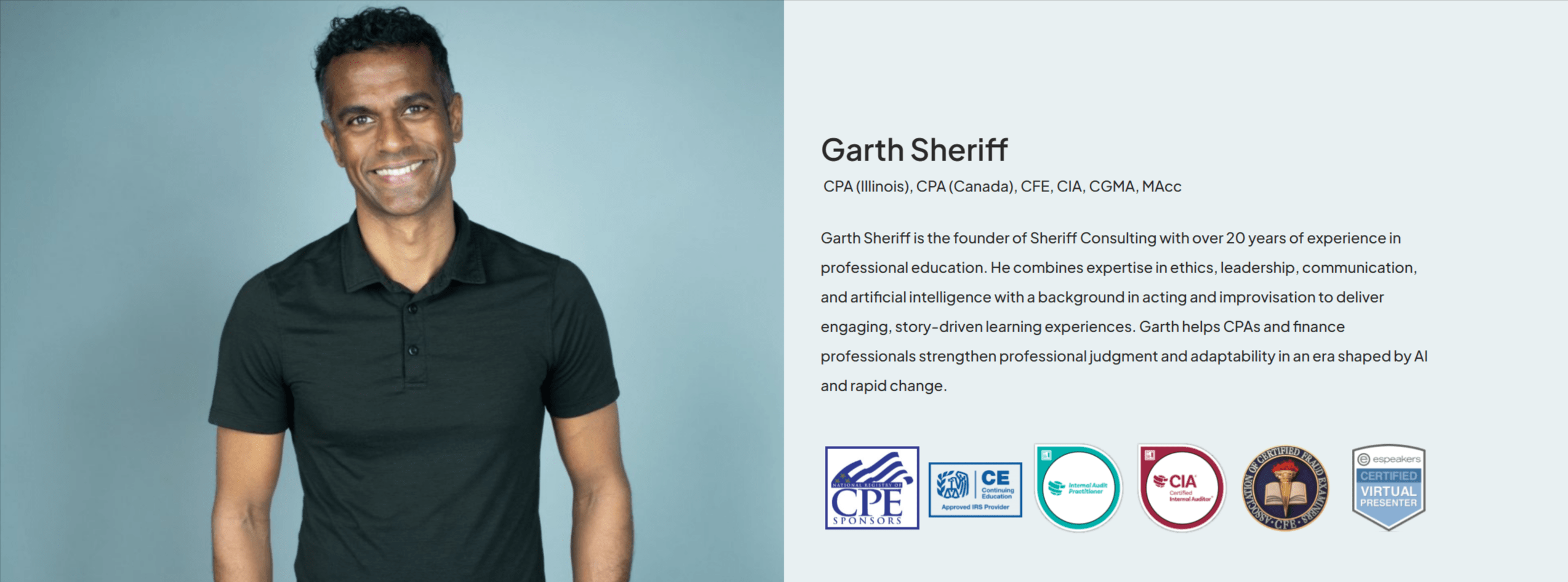
Sheriff Consulting offers ethics CPE courses designed to make continuing education genuinely useful, not just a formality. Our courses use real corporate fraud cases, including FTX, Theranos, and Boeing, to walk through ethical decision-making in a way that sticks. You can browse our full course catalog and confirm which programs meet your state’s specific requirements on our CPE courses page. If you’re comparing requirements across states, our Texas CPA ethics CPE guide is a useful reference point for how these rules can differ.
Frequently Asked Questions
- How many ethics CPE hours does Florida require? Four hours per two-year reporting cycle, from a course approved to cover Florida Statutes and board rules specifically.
- When does my Florida CPE cycle end? Florida renewal cycles are tied to your birth month, not a single statewide date, so check your specific renewal date through the Florida DBPR.
- Can I complete Florida ethics CPE online? Yes, as long as the course is offered by a provider approved for Florida and delivered in an accepted format, such as a live webinar or self-study program.
- Does an ethics course approved for another state count in Florida? Not automatically. Confirm the course has been specifically approved to meet Florida’s statutory requirements before relying on it for renewal.
- What happens if I miss the ethics requirement? Your license can be considered non-compliant even if your general CPE hours are complete, since Florida tracks ethics hours separately. Contact the Florida Board of Accountancy directly if you think you may have fallen behind.
This guide is intended as a general overview. Requirements can change, and the Florida Board of Accountancy is always the final authority on what satisfies your license renewal. Confirm current rules directly with the board before your deadline.