Boeing’s Ethical Failures: What Every CPA Needs to Know
Boeing was once the gold standard of American manufacturing.
For decades, the company represented what disciplined engineering, rigorous quality control, and a safety-first culture could produce. It built some of the most trusted aircraft in aviation history. Its reputation was essentially untouchable.
Then it started cutting corners. And people died.
The Boeing story is not just an aviation story. It is a masterclass in what happens when an organization abandons its ethical foundations in the pursuit of short-term profit. For CPAs and finance professionals, it is one of the most instructive case studies available.
How It Started: The McDonnell Douglas Merger
To understand Boeing’s ethical collapse, you have to go back to 1997 and the merger with McDonnell Douglas.
Before the merger, Boeing was engineering-led. Safety and quality were not talking points. They were the company’s actual operating philosophy. Engineers had real authority and real voice. If something was not right, it got fixed before it left the factory.
McDonnell Douglas operated differently. It was a company that had been struggling financially and had adopted a management culture prioritizing cost control and shareholder returns over almost everything else. An emphasis on short-term profitability and a shift away from an engineering-led culture toward more centralized corporate control made engineers fearful of voicing their safety concerns to managers.
When the two companies merged, McDonnell Douglas executives ended up running Boeing. The culture that followed was not Boeing’s. It was theirs.
The 737 MAX and the Decisions That Led to Disaster
In 2011, American Airlines told Boeing it was considering placing an order with rival Airbus for its next-generation aircraft. To keep America’s business, Boeing’s CEO scrapped plans to develop a new airplane model and instead decided to update its existing 737, with executives setting tight deadlines and pushing engineers to complete their work in half the usual time.
The result was the 737 MAX, a redesigned aircraft with more powerful engines that altered the plane’s handling characteristics. To compensate, Boeing developed a software system called MCAS that would automatically push the nose of the aircraft down under certain conditions. The system had a critical flaw. And pilots were not properly trained on it because disclosing it would have required additional certification that would have delayed the aircraft and cost money.
In October 2018, Lion Air Flight 610 crashed into the Java Sea. All 189 people on board were killed. Five months later, Ethiopian Airlines Flight 302 went down under nearly identical circumstances. Another 157 people were dead.
Boeing had not previously admitted to any wrongdoing until July 2024, when it agreed to plead guilty to criminal fraud charges stemming from the crashes. Scholasticahq
The Door Plug Blowout: The Story Continued
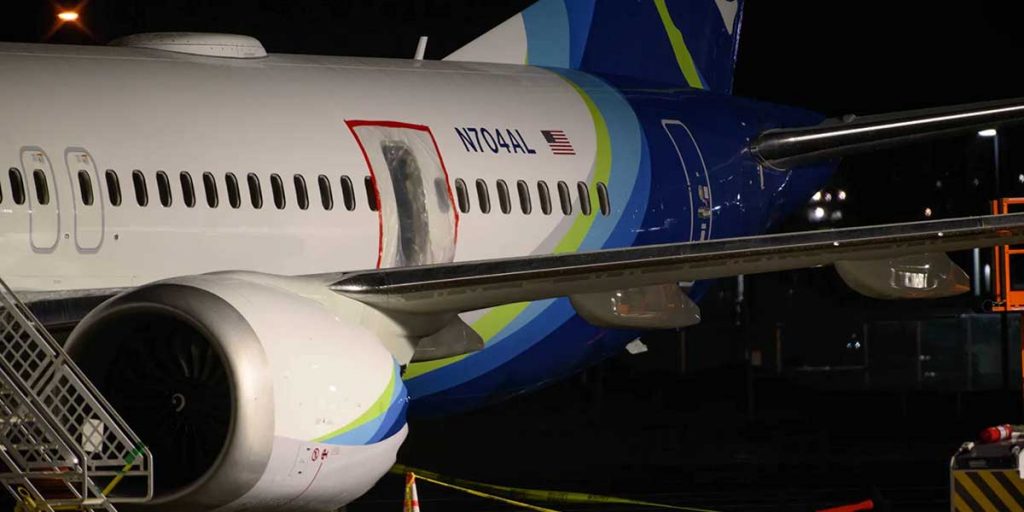
Many people assumed Boeing had turned a corner after the 737 MAX crashes. On January 5th, 2024, an airplane’s door panel blew out midair during an Alaska Airlines flight. Following the investigation, the National Transportation Safety Board reported that the aircraft left the factory without four bolts securing the door, because Boeing was hurrying production sequences and there was no documentation indicating the door had been removed for reinstallation.
The FAA responded by initiating an investigation into Boeing’s 737 quality-control system and announced it would not approve production rate increases until Boeing was in full compliance with required quality-control procedures.
The pattern was the same as before. Speed over safety. Production pressure over quality. A culture where raising concerns was professionally dangerous.
What the Five Pillars of Ethics Have to Do With This
The International Ethics Standards Board for Accountants identifies five core principles that define professional ethics: integrity, objectivity, professional competence, confidentiality, and professional behavior.
Every one of them was compromised at Boeing.
Integrity requires being straightforward and honest in all professional relationships. Boeing misled regulators about the MCAS system. Objectivity requires not allowing bias or conflicts of interest to override professional judgment. Financial pressure overrode safety judgment at every critical decision point. Professional competence requires maintaining knowledge and skill at the level required for the work. The engineers who flagged concerns were marginalized rather than heard.
For CPAs specifically, these pillars are not abstract concepts. They are the framework you operate under every day. Boeing shows what happens at a massive scale when an organization treats them as optional.
Psychological Safety and Why It Matters to Finance Professionals
A broken corporate culture had been to blame at Boeing, with slogans, public relations efforts, and bureaucratic shuffles taking the place of meaningful change.
The term that comes up repeatedly in the Boeing case is psychological safety. The degree to which people in an organization feel safe raising concerns without fear of professional retaliation. Boeing had none of it, essentially. Engineers who pushed back were reassigned or pushed out. The message was clear. Keep your concerns to yourself.
This dynamic is not unique to aviation. It shows up in accounting firms, finance departments, and corporate governance structures everywhere. The CPA who sees something irregular and stays quiet because the partner does not want to hear it. The auditor who softens a finding because the client relationship feels too important to risk. These are smaller-scale versions of the same failure.
The Lessons That Actually Matter
Boeing is not a story about a few bad actors at the top. It is a story about how institutional pressure, normalized deviance, and the erosion of psychological safety can gradually compromise an entire organization’s ethical foundation while everyone involved tells themselves they are still doing the right thing.
That is the lesson that belongs in every CPA’s professional toolkit.
The Professional Ethics: A Boeing Story course at Sheriff Consulting breaks this case down across ten modules covering Boeing’s history, the McDonnell Douglas merger, the 737 MAX crashes, the causes of the safety failures, company culture, corporate governance, psychological safety, and the role of whistleblowing. It is two CPE credits, NASBA-approved, available on demand, and built around the actual documented record of what happened and why.
If you want ethics CPE that stays with you after you close the browser, this is the kind of case that does it.