
Ethics CPE Requirements by State: The Complete 2026 Guide for U.S. CPAs
Ethics CPE is not optional. Every active CPA license in the United States carries a continuing education requirement, and in almost every state, a portion of those hours must be completed in professional ethics. The specifics vary significantly from one jurisdiction to the next, and assuming you know your state’s rules without verifying them is one of the most common compliance mistakes working CPAs make.
This guide covers what you need to know about ethics CPE requirements across U.S. states in 2026, including which states require board-approved courses, which accept general NASBA-approved ethics content, and what the difference between those two categories actually means for your license.
Before diving into the state-by-state breakdown, one important note. State boards of accountancy set CPE requirements, not a single national body. The AICPA and NASBA provide guidance and model standards, but the ultimate authority on what counts rests with each individual state board. Always verify your specific requirements directly with your state board before enrolling in any course.
Understanding the Two Types of Ethics CPE
Not all ethics CPE is interchangeable, and this is the most important thing to understand before you spend money on a course.
The first type is general or behavioral ethics CPE. These are NASBA-approved courses built around professional conduct, ethical decision-making, fraud awareness, and the application of ethical principles in professional practice. They count toward the ethics requirement in most states and can be taken from any NASBA-registered sponsor.
The second type is state-specific regulatory ethics. These courses cover a particular state’s accountancy laws, board rules, and regulatory framework. Several states require this type of course specifically, and a general NASBA-approved ethics course will not satisfy the requirement, regardless of how good it is. Buying the wrong type means the credits will not satisfy the requirement you bought them for.
Knowing which category your state requires before you enroll saves you the frustration of completing hours that do not count.
States That Require Board-Approved Ethics Courses
Several high-population states fall into the board-approved category and deserve special attention.
- Texas requires every licensee to complete a four-credit ethics course approved specifically by the Texas State Board of Public Accountancy, completed on a two-year cycle. A general NASBA ethics course does not satisfy this requirement. The course must come from a provider registered with the Texas board.
- Florida requires four hours of ethics CPE every two-year renewal period, and those courses must be approved by the Florida Board of Accountancy. Ethics courses approved solely by NASBA or another state do not satisfy Florida’s requirement unless they are also approved by the Florida Board. NASBA Registry
- Virginia requires two hours of Virginia-specific ethics annually, and providers offering ethics courses must register with the board and have their content approved. The annual cadence makes Virginia one of the more demanding states on the list in terms of scheduling.
- New York has one of the most important distinctions of any state. New York will not accept behavioral ethics as a substitute for professional ethics. Behavioral ethics is categorized in the Advisory Services subject area. If New York is your principal place of business, only an ethics course approved by NYSED is acceptable. This catches a significant number of CPAs off guard who assume a quality ethics course from a reputable provider will satisfy the requirement regardless of state.
- Louisiana requires a board-approved professional ethics course, but only in even-numbered years. Other ethics courses are classified as behavioral ethics and can count toward total CPE hours but will not substitute for the mandatory ethics course. 2026 is an even-numbered year, so Louisiana CPAs need the board-approved course this cycle. California Society of CPAs
- Mississippi requires four hours of ethics CPE with at least one of those hours specifically covering Mississippi Public Accountancy Law and Regulations, and the course must be board-approved.
- Tennessee, New Jersey, and Virginia all require separate state ethics course approval, meaning courses that are accepted in other states may not automatically qualify.
States That Accept General NASBA-Approved Ethics CPE
The majority of U.S. states accept general professional ethics CPE from any NASBA-registered sponsor. The requirement is typically four hours per reporting period, though the length of that period and total hour requirements vary.
California requires four hours of ethics education during each two-year renewal period. Ethics courses do not need to be selected from a board-approved list, and courses may include a review of nationally recognized professional standards and case-based instruction focusing on real-life situational learning. California does not accept courses on topics like sexual harassment or workplace violence toward the ethics requirement, even if they touch on conduct. – Cpethink
Pennsylvania requires four hours of professional ethics education during each biennial reporting period. Ethics courses generally address professional conduct, ethical responsibilities, and the application of ethical principles in public accountancy, and do not need to be state-specific.
Colorado requires four hours of ethics CPE within each reporting period, of which up to two hours may be in Colorado Rules and Regulations. One important nuance: for CPE purposes, behavioral ethics will not be considered personal development in Colorado, which is a favorable classification for CPAs taking case-study-driven ethics courses. Becker
Vermont, Alaska, Arizona, Idaho, and the majority of remaining states follow the standard pattern of four hours of ethics per two-year reporting period, accepting NASBA-approved courses from registered sponsors.
Alabama stands out as one of the more frequent requirements, with two hours of ethics CPE required annually rather than every two or three years.
South Dakota is notably the only state with no ethics CPE requirement for licensed CPAs.
What to Look for in a NASBA-Approved Ethics Course
If your state accepts general NASBA-approved ethics CPE, the quality of the course you choose matters more than most CPAs realize. Ethics CPE for CPAs typically covers professional conduct, independence rules, objectivity, confidentiality, and state-specific accountancy laws and board regulations. That is the minimum. The question is whether the course goes beyond the minimum in a way that actually develops your professional judgment.
The most effective ethics CPE is built around real cases. Not hypothetical scenarios or abstract frameworks, but documented accounts of how qualified professionals made decisions that ended careers and triggered investigations. The Wirecard collapse, the FTX implosion, the Boeing ethics scandal, the WorldCom accounting fraud. These are not historical curiosities. They are forensic records of how ethical failure actually operates in professional environments under pressure.
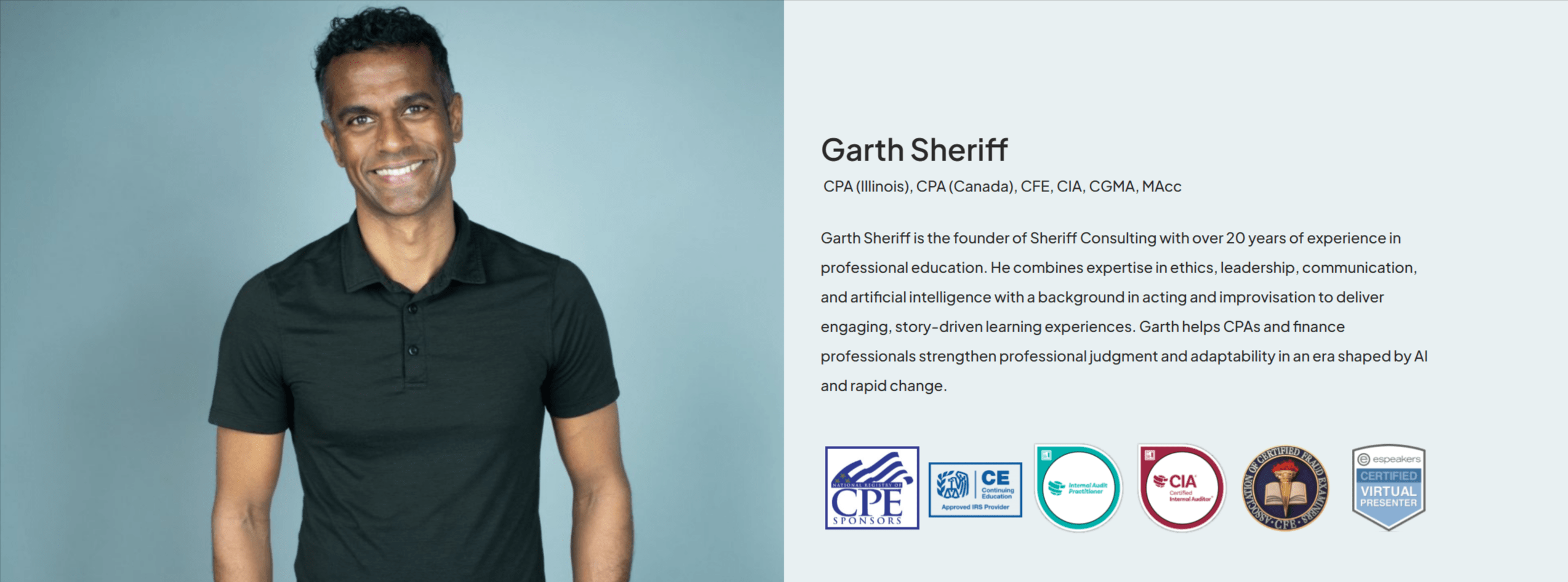
That is the philosophy behind every ethics CPE course at Sheriff Consulting. Each course is NASBA-approved, built around real fraud cases analyzed in clinical detail, and developed and delivered by Garth Sheriff, a CPA licensed in both Illinois and Canada and a Certified Fraud Examiner with over twenty years of professional education experience. The content is designed to do more than satisfy a state board requirement. It is designed to change how you think when a genuinely difficult professional moment arrives.
Verifying Your State’s Requirements Before You Enroll
The state-by-state landscape outlined here reflects the best available information as of 2026, but requirements can and do change. State boards update their rules, reporting periods shift, and approved provider lists get revised. The NASBA Registry is the most reliable centralized resource for verifying your state’s current ethics CPE requirements before committing to a course.
The steps are straightforward. Confirm your state’s ethics CPE hour requirement and reporting period. Confirm whether your state requires a board-approved course or accepts general NASBA-approved ethics content. Confirm that the provider you are considering is registered on the National Registry of CPE Sponsors. And confirm that the field of study listed on the course certificate matches what your state accepts, since the distinction between professional ethics and behavioral ethics matters in certain jurisdictions.
Once you know your state accepts NASBA-approved ethics content, explore the full ethics CPE catalog at Sheriff Consulting to find courses built around the real cases and forensic analysis that make ethics education worth the hours you put into it. For ongoing professional development between renewal cycles, The Fraud Complex covers the world’s most consequential financial scandals in depth every week.
Your state board sets the minimum. What you take from the hours is entirely up to you.